 Aurora Borealis Tour Rovaniemi
Best Time to See the Northern Lights in Rovaniemi, Month by Month
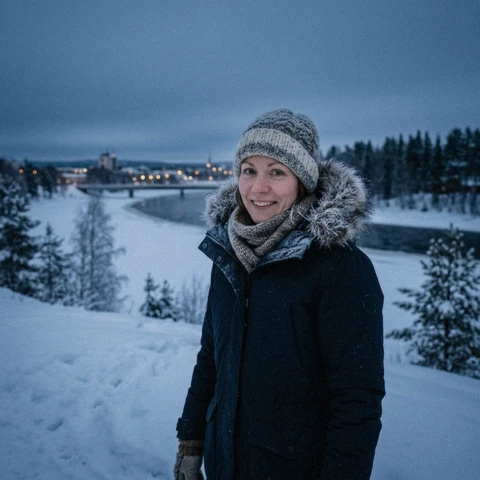
The best time to see northern lights in Rovaniemi is not the month most people book. December sells out first because of the snow and the reindeer and the man in the red suit, and it is a perfectly good aurora month. It is not the best one. The strongest statistical windows sit around the equinoxes, in September into early October and again in March, when the geometry between the solar wind and the Earth's field favours displays and the air is fifteen degrees kinder. Below is the season month by month, alongside the northern lights tours leaving Rovaniemi, with darkness hours, official night lows and what each month is actually good for.
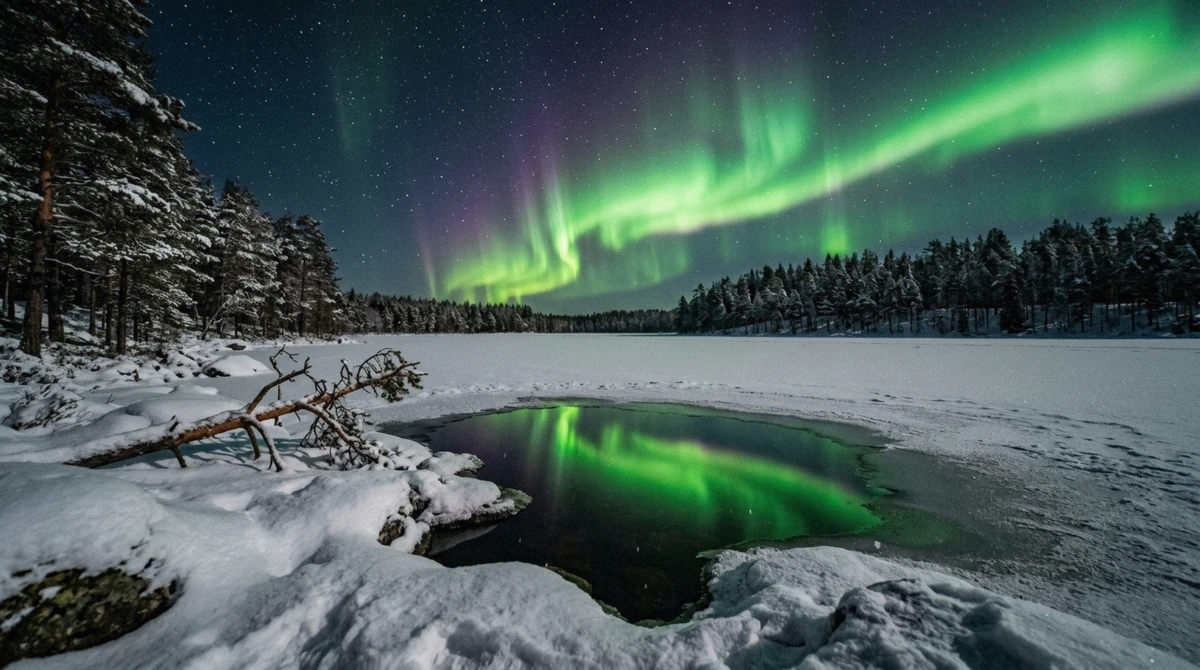
The Season in One Paragraph
Late August to early April, peaking twice
The aurora is active over Rovaniemi all year. You can only see it when the sky is dark, which here means from late August until early April. Between late April and mid-August the nights never get dark enough, and the sun does not set at all from 7 June to 6 July.
Inside the season there are two peaks and one plateau. September into early October is the first peak, with equinox geometry, open water for reflections and temperatures around plus 4.9 °C at night. March is the second, with equinox odds, deep snow, twelve hours of daylight for the rest of your day, and night lows near minus 9.1 °C.
Between them sits the deep winter plateau. November to February gives the most darkness by a distance, which is genuinely useful, along with the coldest air and the shortest days for everything else you came to do.
Why September and March beat December
Around the equinoxes the Earth's magnetic field lines up with the solar wind more favourably, and that alignment increases the chance of the coupling that drives auroral substorms. The effect is well documented and it is the reason aurora guides in every northern country point at the same two windows.
It does not mean December is a bad bet. It means that in December you are buying darkness, snow and atmosphere, and in September and March you are buying odds and comfort. Rovaniemi's own tourism material and the Santa Claus Village visitor pages both name the equinox periods as the statistical peaks.
The practical difference for a traveller is stamina. Standing still for an hour at plus 5 °C in September is easy. Doing it at minus 20 °C in January is a skill, and the reason what you wear matters more than any other piece of preparation.
Month by Month
Darkness, temperature and what each month is for
Darkness hours are derived from Visit Rovaniemi's published daylight figures. Night lows are the Finnish Meteorological Institute's 1991 to 2020 normals for Rovaniemi. Read the two columns together: the month with the most darkness is also the month that asks the most of your clothing.
| Month | Hours of darkness | Average night low | What the month is good for |
|---|---|---|---|
| Late August | About 4 | 9.6 °C | Season opens. Warm, green landscape, aurora possible late at night only |
| September | About 8 | 4.9 °C | Equinox peak. Open water reflections, autumn colour, comfortable waiting |
| October | About 11 | -1.3 °C | First snow, long nights, few crowds. The quiet insider month |
| November | About 15 | -6.7 °C | Full darkness arrives, snow settles, prices below December |
| December | About 19 | -10.6 °C | Maximum darkness, Christmas crowds, sky dark by four in the afternoon |
| January | About 17 | -13.5 °C | Coldest and clearest air, deep snow, the classic Lapland picture |
| February | About 13 | -13.3 °C | Cold and stable, daylight returning for daytime activities |
| March | About 9 | -9.1 °C | Equinox peak with full snow cover and twelve hours of daylight |
| Early April | About 5 | -3.4 °C | Season closes. Bright evenings, last chance, spring snow |
What the numbers do not show
Cloud. Neither column above says anything about whether the sky is clear, and cloud is what actually decides your night. Lapland gets long overcast spells in every month of the season, and no amount of darkness helps under one.
That is why we would rather have four nights in October than two in December, and why the tours that matter are the ones with unlimited mileage rather than a fixed viewpoint. Reading the aurora and cloud forecasts properly is worth more than picking the perfect month.
The second thing the table hides is what else you can do. In September you can still hike and paddle. In March you have real daylight for husky farms and snowshoeing. Visit Rovaniemi's own figures give about 2.5 hours of daylight in December, 4 in January, 8 in February and 12 in March, and a lot of the December figure is twilight.
A Season, Start to Finish
How the aurora season builds and fades over Rovaniemi, and what the town is doing around it.
-
Late August
The first dark hour returns
Nights get properly dark around midnight. Green landscape, mild air, very few aurora tourists.
-
September
First equinox peak
Strongest statistical odds of the season, lakes still unfrozen and mirroring the sky.
-
October
Snow arrives, nights stretch
Eleven hours of darkness, first snow cover, the cheapest good month of the season.
-
November to December
Deep darkness
Up to nineteen hours of darkness. Sky black by four in the afternoon. Christmas crowds build.
-
January to February
Coldest, clearest air
Night lows around minus 13 °C. Stable high-pressure spells give the crispest skies of the winter.
-
March
Second equinox peak
Equinox odds with full snow cover and twelve hours of daylight for everything else.
-
Early April
The light closes the season
Evenings brighten fast. By late April the sky no longer gets dark enough.
Hours, Moon and How Many Nights
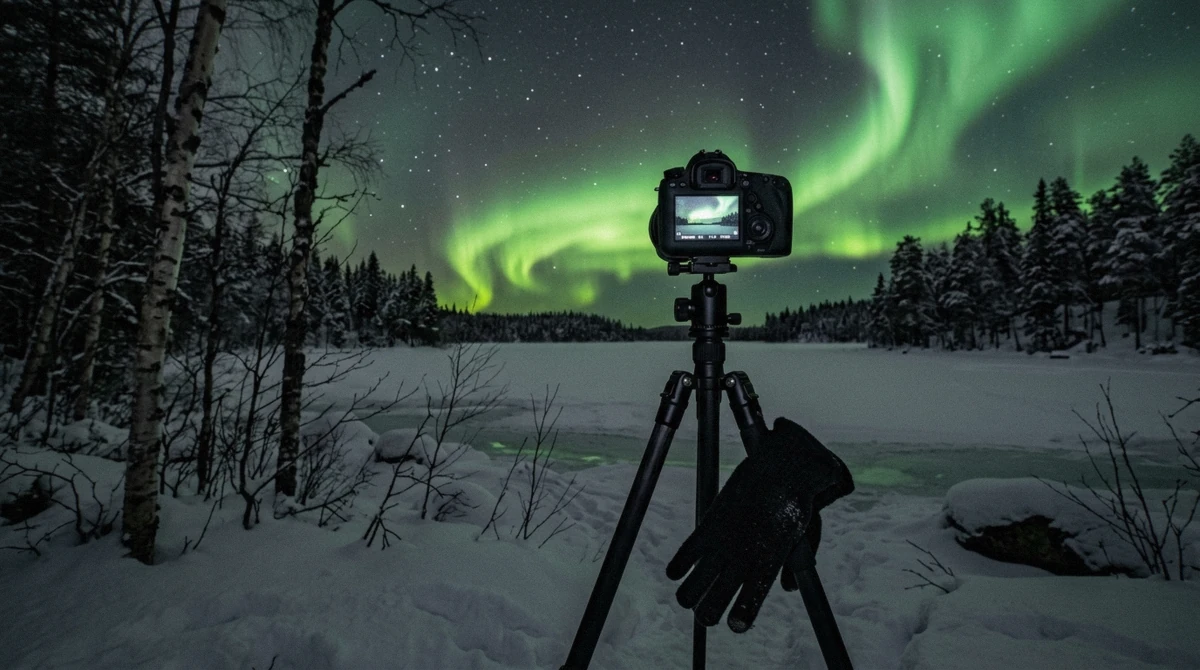
Be outside between nine and two
The aurora is most active between roughly 21:00 and 02:00, and probability peaks around 23:30. Every guided hunt in Rovaniemi is built around that window, which is why pickups run between seven and eight in the evening and returns land between one and two in the morning on a normal night.
If you are watching on your own, that window is the one to protect. Eat early, sleep late, and treat the hours before nine as preparation rather than watching time.
Substorms come in sequences rather than as single events. A display that fades at ten past eleven often returns before midnight, which is exactly the moment most independent watchers give up and go inside.
The moon, and how many nights to book
A full moon lifts the ambient light and washes out the faintest arcs. It also lights the snow, which many photographers prefer, so treat it as a stylistic choice rather than a problem. If you are chasing a specific kind of image, plan around the phase. If you just want to see the aurora, ignore it.
Nights matter far more. Three to four evenings in Rovaniemi turns a coin flip into decent odds and gives an operator's rescheduling guarantee somewhere to go. Tour companies covering the whole of Finland recommend four to seven nights for the same reason.
Book the tour for your first evening and hold the rest in reserve. A guarantee that moves your booking to another night is worth nothing on the night before your flight home.
One more scheduling note. Do not put the hunt on the evening before an early flight. A tour that leaves at seven can return at four in the morning, and on the nights guides chase clear sky into Sweden it runs longer still. If you would rather try it for free between booked nights, the city viewpoints are open every evening of the season.
Where the Solar Cycle Stands for 2026 and 2027
After the maximum, not after the show
Solar Cycle 25 peaked in October 2024. The winters of 2026 and 2027 sit on the declining side of that curve, and NOAA's space weather forecasters put current activity well above the long-term average.
Declining-phase years have their own character. Fewer headline storms, more fast solar wind streams from coronal holes, which produce recurring displays that come back on a roughly 27-day rhythm as the sun rotates. For a traveller that is arguably better than a storm-driven peak, because the odds on any given clear night stay high rather than depending on one dramatic event.
So the honest answer on timing is that the sun is not your limiting factor this decade. Weather is. On the practical side that means picking nights over months, and reading the cloud maps the way the forecast guide sets out. Pick your month for darkness and comfort, book enough nights, and let a guide handle the cloud with northern lights tours leaving Rovaniemi.
| Season | Where the cycle sits | What it means for a Rovaniemi week |
|---|---|---|
| 2024 to 2025 | Maximum, October 2024 | Headline storms, aurora visible far south of Lapland |
| 2026 to 2027 | Declining phase, activity above the long-term average | Recurring displays on a roughly 27-day rhythm, fewer record storms |
| 2028 onward | Deeper decline | Quieter years, though Rovaniemi sits under the oval regardless |
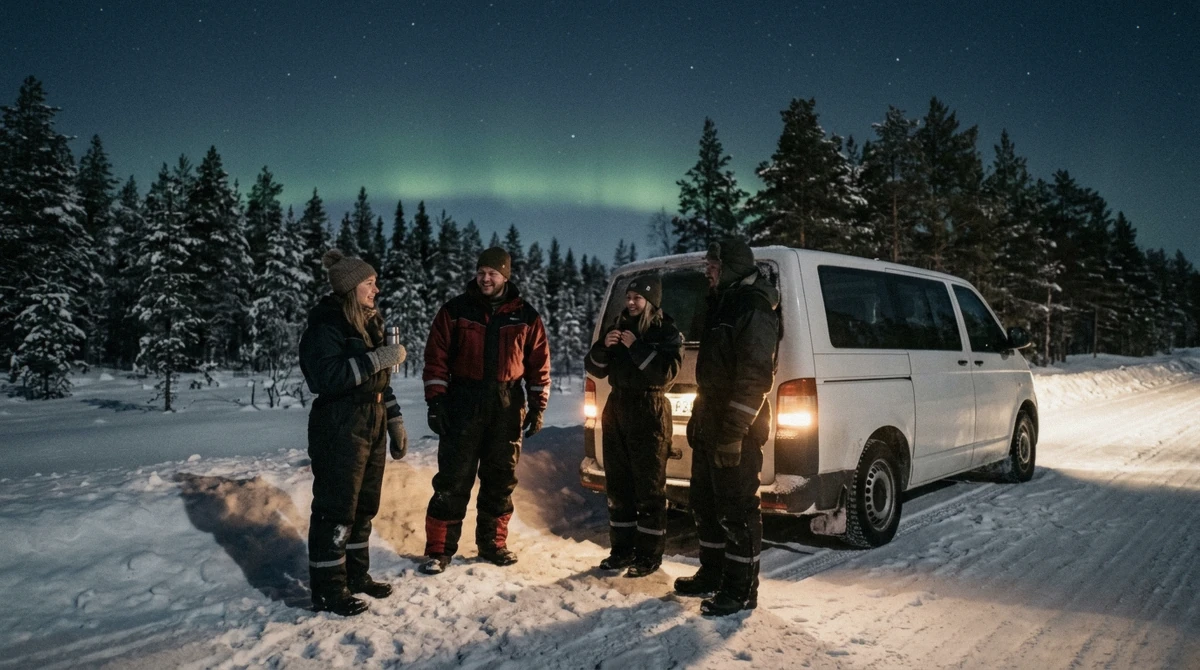
Which Month Fits Your Trip
If you want the best odds with comfortable temperatures
go in September or March. Equinox geometry, night lows of plus 4.9 °C and minus 9.1 °C, and enough daylight for the rest of the trip.
If you want deep snow, reindeer and the Christmas version of Lapland
go in December, accept about two and a half hours of daylight, and book everything early.
If you want the coldest, clearest air and the classic photographs
go in January or February and pack seriously. Night lows sit near minus 13 °C and clear nights run colder.
If you are watching the budget
go in October or November. Eleven to fifteen hours of darkness, snow on the ground from November, and prices below the December peak.
If you can only travel in late April or summer
do not plan around the aurora at all. The sky never gets dark, and from 7 June to 6 July the sun does not set.
Frequently Asked Questions
What is the best month to see the northern lights in Rovaniemi?
September or March. Both sit at an equinox, when the alignment between the solar wind and the Earth's magnetic field favours auroral activity, and both are far more comfortable than midwinter. September nights average plus 4.9 °C and March minus 9.1 °C, against minus 13.5 °C in January.
Is December a good time to see the northern lights in Rovaniemi?
It is good rather than best. December gives the most darkness of any month, about nineteen hours, with the sky black by four in the afternoon. It also brings the Christmas crowds, the highest prices and only about two and a half hours of daylight for everything else on your itinerary.
What time of night are the northern lights strongest?
Between about 21:00 and 02:00, with probability peaking around 23:30. Guided hunts pick up between seven and eight in the evening for that reason. Displays arrive in sequences, so a fade at eleven is not the end of the night, which is when most independent watchers give up too early.
How many nights should I stay in Rovaniemi for the aurora?
Three to four. Cloud stops more nights than weak solar activity does, and a rescheduling guarantee only works while you still have evenings left. Companies covering the whole of Finland suggest four to seven nights. Book your tour for the first evening rather than the last.
Does the moon affect northern lights viewing?
It changes the photograph more than the sighting. A full moon washes out the faintest arcs and lights the snow, which many photographers actively want. Cloud is the variable worth planning around. Moon phase only matters if you are after a particular look in your images.
Will 2026 and 2027 be good aurora seasons in Finland?
Yes. Solar Cycle 25 peaked in October 2024 and the declining phase keeps geomagnetic activity above the long-term average into 2027, with recurring fast solar wind streams rather than isolated storms. Your limiting factor in Rovaniemi is Lapland weather, not the sun.
When does the northern lights season start and end in Rovaniemi?
Late August to early April. Outside that window the nights are not dark enough, and from 7 June to 6 July the sun does not set at all. The season opens with only an hour or two of true darkness around midnight and builds to nineteen hours by December.