 Aurora Borealis Tour Rovaniemi
What to Wear on a Northern Lights Tour in Lapland
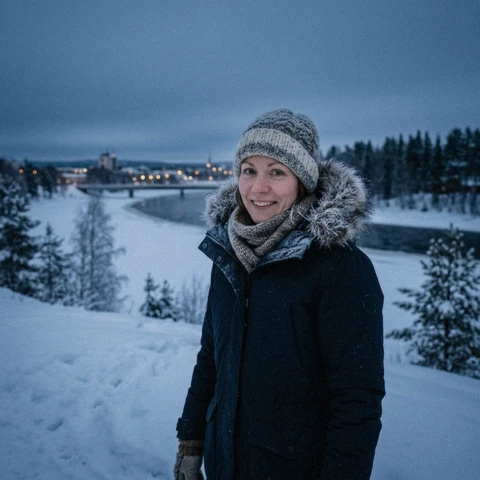
Working out what to wear northern lights tour Lapland conditions demand is simpler than the gear lists suggest, because the operator solves the hardest part for you. Every hunt leaving Rovaniemi hands out thermal overalls and boots rated for Arctic conditions, and they go over your own clothes rather than replacing them. What you supply is everything underneath, plus hands, head and the small things that decide whether hour four is fine or miserable. The distinction that matters: this is a standing-still cold, not a walking cold, and the two need different clothing. Every operator on our Rovaniemi aurora hunts page issues the same outer kit.
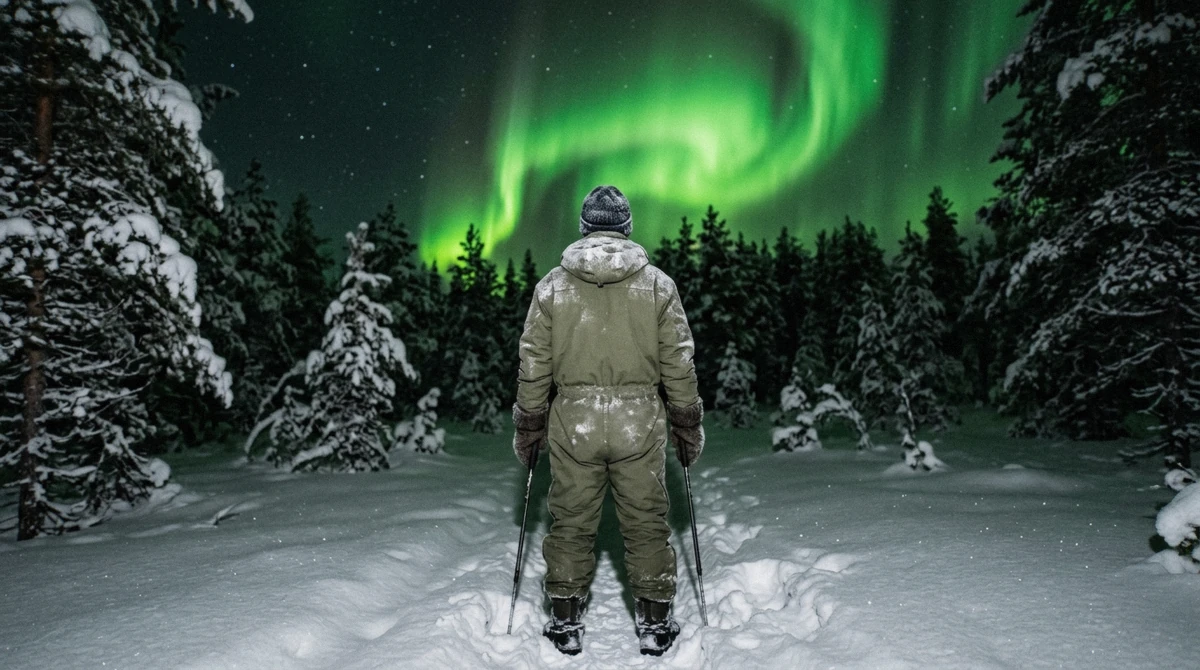
The One Rule: They Lend the Shell, You Bring the Layers
What the overalls do and do not cover
The suit you collect at the tour office is a windproof, heavily insulated outer layer. It stops the wind, it traps the air your body warms, and it survives sitting on snow. It is not a heating system.
Underneath, you are still responsible for the layers that hold your own heat. People who wear jeans and a cotton hoodie under an excellent overall get cold anyway, and blame the suit.
Operators here run tours in air down to minus 40 °C, and January and February night lows in Rovaniemi average close to minus 13.5 °C and minus 13.3 °C under the Finnish Meteorological Institute's long-term normals. Clear aurora nights, the ones you want, run colder than average because no cloud holds the day's heat in.
Standing cold against walking cold
On a husky ride or a snowshoe walk you generate heat continuously. On an aurora hunt you sit in a warm van, step out into the cold, and then stand still for twenty minutes to two hours while a guide watches the sky.
That pattern is why the usual ski-trip advice underdelivers. You need insulation that works without movement, and you need to be able to dump a layer when you get back in the van so you do not arrive at the next stop damp.
A tour night runs 5 to 8 hours, much of it standing still outside the vehicle across three or four stops, and the eight-hour small-group tours run longer. On the nights when the guide drives into Sweden looking for clear sky, guests report ten hours and more.
Provided on the Tour Against What You Bring
Check your listing, but this is the pattern
The long Rovaniemi hunts we track include thermal overalls, boots, hot drinks and a guide photographing you with a DSLR. Nobody includes base layers, gloves or hats, and nobody includes hand warmers.
| Item | Provided by the operator | Bring yourself |
|---|---|---|
| Insulated outer overall | Yes, on the long hunts | No |
| Winter boots, Arctic rated | Yes, sizes issued at the office | Thick socks to wear in them |
| Base and mid layers | No | Yes, wool or synthetic |
| Hat, buff, gloves | No | Yes, plus a second pair of gloves |
| Hot drinks and snacks | Yes, flask and biscuits | Anything you need for a long night |
| Camera and tripod | Guide brings both, photos emailed in 2 to 3 business days | Spare phone battery, optional own camera |
| Hand warmers | No | Yes, about a euro a pair in any supermarket |
The Packing List, Head to Toe
What actually goes in the bag
This is the list we would pack for a January hunt out of Rovaniemi. In September or late March you can drop a layer from the middle, though the hat and gloves stay.
- Merino or synthetic base layer, long sleeve top and long johns
- Fleece or wool mid-layer for the torso, and fleece trousers if you feel the cold
- Two pairs of socks, wool on the outside, neither of them cotton
- Wool hat that covers the ears, not a fashion beanie
- Buff or neck gaiter you can pull over your nose and chin
- Thin glove liners for camera and phone work
- Thick mittens to go over the liners, warmer than gloves
- Hand warmers, one pair per person per night
- Spare camera and phone batteries for an inside pocket
- Small flask if the tour's hot drinks will not stretch to eight hours
- Head torch with a red mode, which saves your night vision
Why cotton is the wrong choice
Cotton is the wrong choice in Lapland for one reason: it holds moisture against the skin and stops insulating the moment it is damp.
Jeans are the specific offender. They are cold when dry, colder when damp, and they take hours to recover. Every guide in Lapland has a story about someone in jeans who spent the second half of the night in the vehicle.
Wool works because it insulates while wet. Synthetics work because they move moisture away and dry fast. Either is fine, and the price difference between a merino base layer and a supermarket one matters less than the fabric choice itself.
Hands, Camera and Phone
The two-glove system
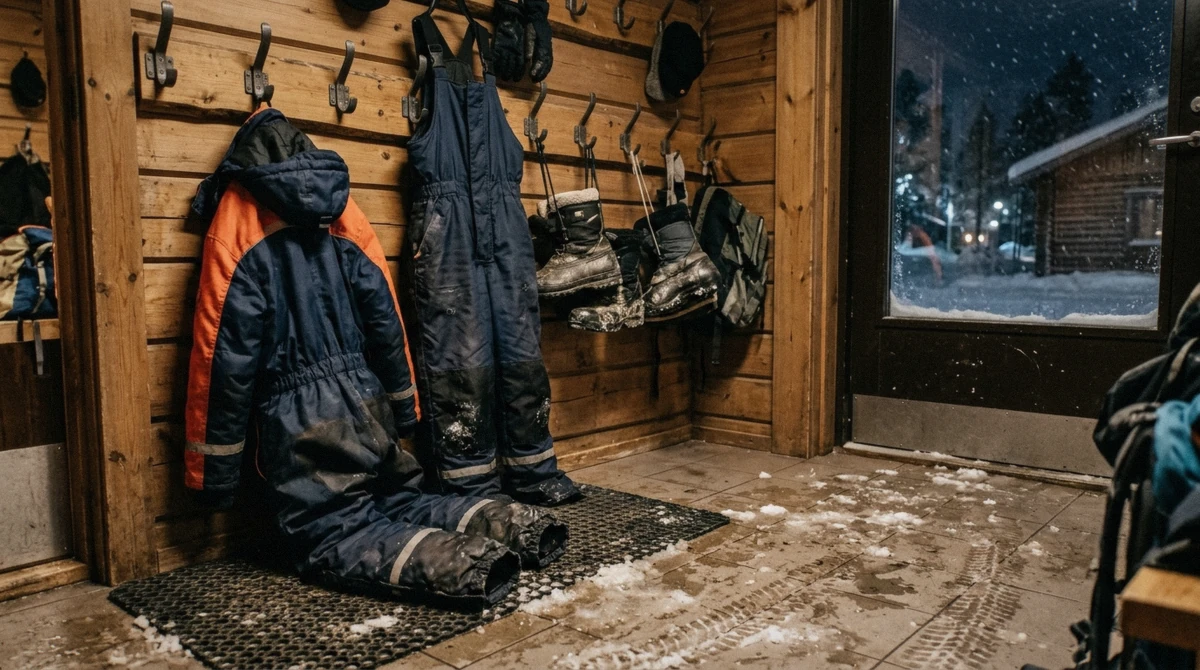
Hands lose the argument first, and they lose it because of the camera. Every time you pull off a mitten to press a button, you spend heat you will not get back for twenty minutes.
The fix is layered: thin liners you can operate a touchscreen through, thick mittens over the top. You take off the mittens, not the liners, and you put them back on immediately. Mittens beat gloves because your fingers share warmth.
Hand warmers cost about a euro in any Rovaniemi supermarket and last the night. Put one in each mitten rather than in your pockets, where they warm nothing that matters.
Batteries and the cold
Lithium batteries lose capacity fast below freezing. A phone at 60 percent in your outer pocket can die within half an hour at minus 20, usually at the moment the sky finally does something.
Carry spares in an inside pocket, against your body, and swap them rather than trying to nurse a cold one. A phone that has died will usually come back once it warms up, so do not assume it is broken.
If you are bringing your own camera, the guide already carries a tripod, and every tour includes their photographs by email in about 2 to 3 business days. The point of your own kit is the frames only you want, not duplicating what is included. We cover why the results look greener than the sky on the tour comparison page.
Buy at Home, Buy in Rovaniemi, or Go Without
If you already ski or hike in winter
you own everything you need. Pack the base layers, the hat and both pairs of gloves, and leave the big coat at home.
If you are coming from a warm climate with nothing suitable
buy base layers, hat and gloves at home where they are cheaper, and rely on the tour's overalls and boots for the outer shell.
If you arrive underdressed and realise it on day one
Rovaniemi's outdoor shops and supermarkets sell wool socks, hats, liners and hand warmers within a few minutes' walk of the centre.
If you are travelling with children under eight
check the operator has overall and boot sizes for them before you book, and plan a shorter night. Standing still for hours in the dark is hard on small children.
If you plan to try it on your own from a city viewpoint
you have no overalls to fall back on, so the outer layer becomes your problem too. See seeing the aurora without a tour for what that evening really involves.
Children, Older Travellers and Long Nights
The four-hour question
The tours here run five to eight hours, and most of the discomfort arrives in the last third. That is the part to plan for rather than the first stop, when everyone is excited and warm from the van.
For children, the practical limits are boredom and cold in that order. Snacks, a fully charged device for the drive, and a genuine willingness to sit the second half out in the vehicle all help. Some operators offer infant seats, though the night is the same length.
For older travellers or anyone with circulation problems, the two things that matter are the two-glove system and warm feet. Thin socks inside borrowed boots is the most common mistake we see, and it is the one that ends nights early.
Whichever month you pick, and September and March are the kindest, the clothing question does not change much. The overall handles the wind. You handle the rest.
One last piece of planning that has nothing to do with clothing: pick a night early in your stay. Operators reschedule when the cloud is hopeless, and that only helps while you have evenings left. The forecast guide covers which sources decide that call.
| Who | The part that bites | What fixes it |
|---|---|---|
| Children under eight | Boredom before cold, then both at once | A shorter tour, snacks, and permission to sit the second half out in the van |
| Teenagers | Refusing the hat | Buy the hat before the trip so it is theirs, not a loan |
| Anyone with cold hands | Removing mittens for the camera | Liners under mittens, one hand warmer inside each mitten |
| Older travellers | Feet, in borrowed boots with thin socks | Two pairs of socks, wool outside, boots a size up |
| Photographers | Standing still longest, batteries dying | Spares in an inside pocket, red-mode head torch, warmers in the camera bag |
Frequently Asked Questions
What should you wear on a northern lights tour in Lapland?
Wool or synthetic base layers, a fleece or wool mid-layer, wool socks, a hat covering the ears, a buff, and two pairs of gloves. The operator provides the insulated overall and Arctic boots on all four Rovaniemi tours, worn over your own clothes, so the outer shell is not your problem.
Do northern lights tours provide warm clothes?
Yes. Every tour we track in Rovaniemi issues thermal overalls and boots at the meeting point, along with hot drinks. None of them provides base layers, hats or gloves, and none includes hand warmers, which cost about a euro a pair in any local supermarket.
Why should you not wear cotton in Lapland?
Cotton holds moisture against your skin and stops insulating once damp. You will sweat walking to the meeting point and sitting in a heated van, then stand still outside at minus 15. Jeans are the worst offender: cold dry, colder damp, and slow to recover.
How do you keep your hands warm and still use a camera?
Wear thin liners you can operate a screen through, with thick mittens over them. Remove only the mittens, and put them straight back. Mittens beat gloves because the fingers share heat. A hand warmer inside each mitten, rather than in a pocket, does the rest.
How cold does it get on a northern lights tour in Rovaniemi?
January and February night lows average about minus 13.5 °C and minus 13.3 °C under the 1991 to 2020 normals, and operators run tours in air as cold as minus 40 °C. Clear aurora nights run colder than average, since there is no cloud to hold the day's heat.
Do you need to buy special clothing before flying to Finland?
No coat, no boots. Both come with the tour. Buy base layers, a wool hat and two pairs of gloves at home, where they cost less than in a Lapland tourist shop, and where you will use them again. If you arrive short, Rovaniemi's outdoor shops sell all of it within walking distance of the centre.
What should you put in your pockets for the night?
Spare phone and camera batteries in an inside pocket against your body, hand warmers, a small snack, and a head torch with a red mode. A red light lets you see your camera settings without destroying the twenty minutes of dark adaptation your eyes just built.